

What Is a Business Copier?
A business copier is a specialized device engineered to meet the rigorous demands of commercial environments, distinguishing itself markedly from consumer printers. Unlike typical home printers, business copiers are designed for higher print volumes, enabling multiple users to operate simultaneously without compromising speed or quality. Key business copier features include advanced scanning, copying, and secure printing capabilities, alongside robust document workflows that streamline operations.
When considering how to buy a copier, it is crucial to evaluate whether a new vs used copier or a refurbished office copier best suits specific organizational needs. A thorough office copier buying guide will illuminate factors such as durability, functionality, and total cost of ownership. Understanding these dimensions not only aids in identifying the right copier but also guarantees businesses avoid overpaying or acquiring equipment ill-suited to their requirements.
New vs. Used vs. Refurbished Copiers: What Is the Difference?
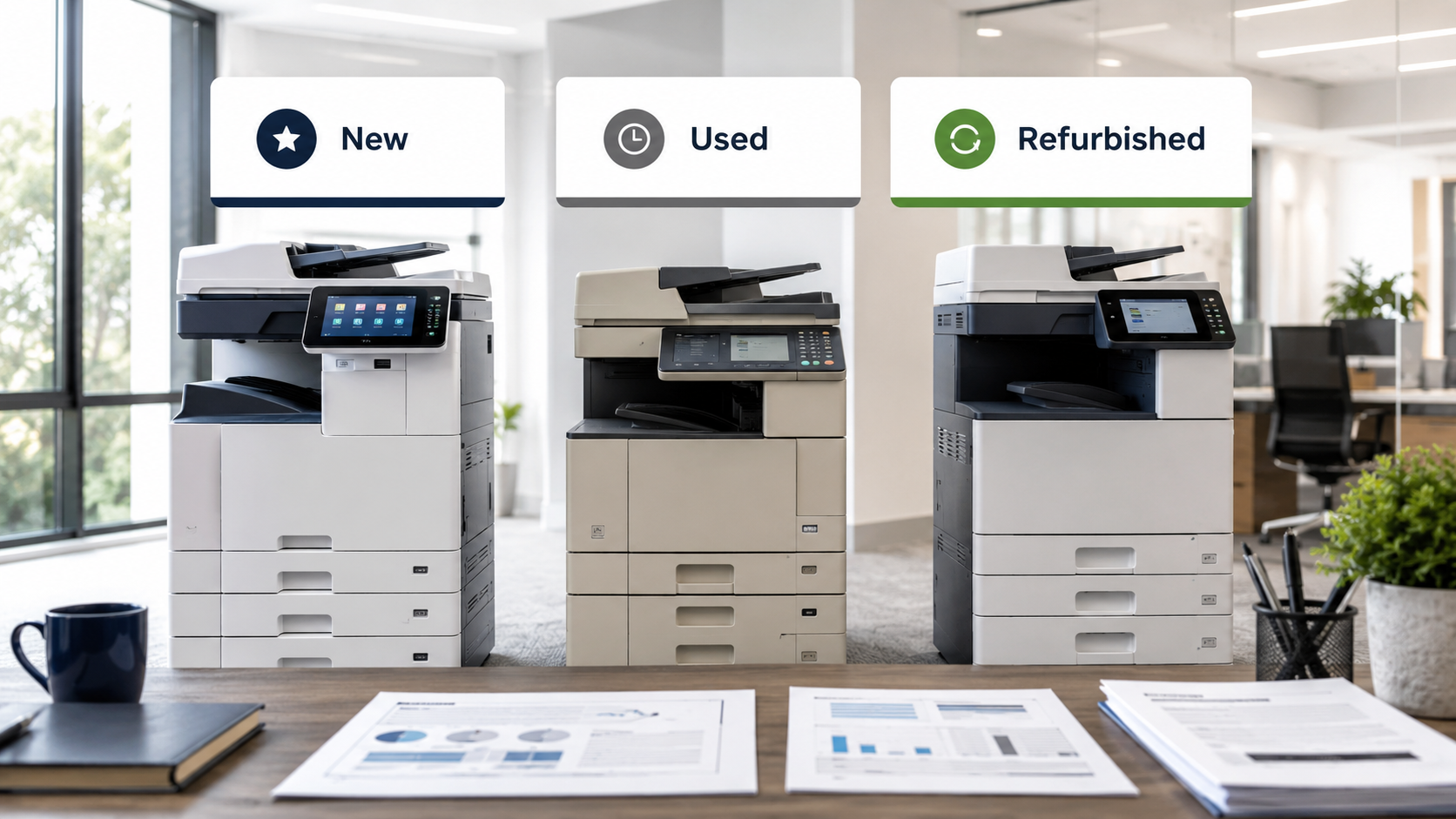
When evaluating options for acquiring a business copier, understanding the distinctions between new, used, and refurbished machines becomes vital. New copiers, sourced directly from manufacturers or authorized dealers, offer the latest technology, warranties, and support but come at a premium price. In contrast, used copiers are previously owned machines that may lack updated features and reliability; their condition can vary greatly. The used vs refurbished copier distinction is important; refurbished machines undergo thorough inspection, repair, cleaning, and testing to guarantee they meet performance standards before resale, often at a lower cost than new models. For businesses, a detailed office copier checklist and a commercial copier buying guide are invaluable tools when maneuvering through these options. Ultimately, the choice among new, used, and refurbished copiers hinges on budget, required features, and long-term service considerations, making informed decisions essential in the copier buying process.
Why Many Businesses Choose Refurbished Commercial Copiers
Many businesses opt for refurbished commercial copiers due to the significant cost advantages they provide without compromising on quality. By selecting refurbished models, organizations can access high-performance equipment typically reserved for larger budgets. Refurbished commercial copiers often undergo rigorous testing and certification processes, ensuring they meet stringent performance standards. This allows businesses to buy a copier that not only fits their financial constraints but also serves as the best copier for office needs.
Furthermore, refurbished multifunction copiers for business offer an array of features—such as scanning, printing, and faxing—while maintaining operational efficiency. Many companies leverage these machines to enhance productivity without the steep depreciation associated with new models. Consequently, for those looking to buy a business copier, considering refurbished options can yield substantial savings and superior performance, making them a strategic choice in today’s competitive landscape.
How to Match a Copier to Your Office’s Monthly Print Volume
Selecting the right copier involves understanding the specific needs of an office, particularly in relation to monthly print volume. A business copier buying guide emphasizes that print volume notably influences copier selection. For instance, a small office generating approximately 1,000 pages monthly will require a different machine compared to a law firm or medical office producing tens of thousands of pages.
Copiers are rated for their monthly duty cycle, which indicates ideal performance based on expected usage. Selecting a copier exceeding your monthly volume guarantees longevity and reliability, while choosing one that falls short can lead to frequent breakdowns and decreased productivity. Additionally, understanding the distinction between new, used, and refurbished copiers is vital when deciding which machine to buy. Ultimately, aligning the copier’s capabilities with the office’s print demands is critical for a successful purchase and ongoing operational efficiency.
Color Copier or Black-and-White Copier: Which One Should You Buy?
Determining whether to invest in a color copier or a black-and-white copier is essential for businesses aiming to align their printing capabilities with operational needs and budget constraints. Color copiers are invaluable for producing marketing materials, proposals, and client-facing documents that require visual impact. Their ability to enhance branding can justify the higher initial investment and ongoing operational costs in these contexts.
Conversely, black-and-white copiers are more economical for producing legal documents, invoices, internal reports, and medical forms, where color is often unnecessary. They typically offer lower per-page costs, making them a prudent choice for high-volume printing environments.
Ultimately, the decision hinges on the specific use cases within the organization. Businesses should evaluate their document needs, considering both the nature of the output and the overall budget, to determine which copier type best supports their operational objectives.
What Features Should You Look for in a Business Copier?
When considering a business copier, essential features play a pivotal role in enhancing productivity and efficiency. Key functionalities include an automatic document feeder (ADF) for seamless multi-page copying and duplex printing to reduce paper usage. Wireless and network printing capabilities allow for convenient access from multiple devices, while scanning to email and cloud connectivity facilitate efficient document management.
Additionally, integrated fax capabilities remain relevant for some industries. Finishing options, such as stapling and booklet-making, contribute to professional presentation. Security features, like user codes and data encryption, are vital for safeguarding sensitive information. Mobile printing further enhances accessibility for users on the go.
Selecting a copier with these features guarantees that businesses can optimize their workflows, minimize operational costs, and maintain a secure environment, thereby making informed decisions tailored to their specific needs.
How Much Should You Expect to Spend on a Business Copier?
How much should a business expect to invest in a copier? The cost of a business copier varies greatly, influenced by factors such as speed, volume, brand, age, color capabilities, and additional accessories. Entry-level office machines typically range from $200 to $1,500, while mid-range models can cost between $1,500 and $5,000. High-volume commercial units may start at $5,000 and can exceed $20,000, particularly for advanced multifunction capabilities. Additionally, the choice between new, used, or refurbished models will impact pricing; refurbished units can offer considerable savings while still providing reliable performance. Businesses should also consider ongoing costs associated with service plans, which can add to the total investment. An informed decision requires evaluating both initial costs and potential long-term expenses to guarantee the selected copier aligns with operational needs and budgetary constraints.
Why Copier Service Matters as Much as the Machine
The choice of a copier extends beyond initial purchase costs; the quality of service and support associated with the machine is equally important. A seemingly economical copier can quickly become a financial burden if toner, parts, maintenance, and repair support are unreliable. Businesses must consider the total cost of ownership, which includes ongoing service agreements and the availability of replacement components.
A robust service plan guarantees timely repairs and minimal downtime, which is critical for maintaining operational efficiency. Additionally, reliable support can prevent minor issues from escalating into costly malfunctions.
Investing in a copier with an all-encompassing service package not only safeguards productivity but also enhances the longevity of the equipment. In an environment where every minute counts, the assurance of dependable service can differentiate a wise investment from a regrettable one, ultimately influencing the copier’s overall value to the organization.
How to Choose the Right Copier Dealer
Selecting the right copier dealer is essential for ensuring a seamless purchasing experience and ongoing support. Buyers should evaluate inventory options, confirming a diverse selection of new, used, and refurbished copiers that meet specific business needs. A robust service department is important; it should offer timely maintenance and technical support to minimize downtime.
Delivery and setup services must be included, ensuring that the copier is operational without additional hassles. Warranty terms should be transparent, with clear coverage details to protect the investment. Local support is invaluable, as it allows for quicker response times and personalized service.
Moreover, transparent pricing structures are crucial to avoid unexpected costs. A dealer’s experience in the industry can signify reliability and expertise, helping buyers navigate complex choices. By considering these factors, businesses can select a dealer that aligns with their operational requirements and long-term goals.
Final Checklist Before Buying a Business Copier
Before finalizing the purchase of a business copier, an extensive checklist can significantly aid in making an informed decision. Key considerations include evaluating print volume requirements, as this determines the copier’s capability and efficiency. Examine color needs for specific tasks, and confirm compatible paper sizes to guarantee versatility. Scanning capabilities should also be addressed to meet document management needs.
Budget constraints necessitate comparing lease versus purchase options, alongside analyzing warranty terms that cover potential repairs. Service response time is critical for minimizing downtime; thus, inquire about support availability. Additionally, understanding ongoing toner costs will impact long-term budgeting. Finally, installation logistics should not be overlooked, as proper setup is essential for peak functionality. By systematically addressing these factors, businesses can secure a copier that aligns with their operational demands and financial strategies.
Frequently Asked Questions
What Brands Are Most Reliable for Business Copiers in 2026?
In 2026, brands such as Canon, Xerox, and Ricoh are recognized for their reliability in business copiers. These manufacturers offer robust performance, advanced features, and excellent service support, catering to diverse office needs. Additionally, HP and Brother have gained traction for their multifunction capabilities and cost-effective solutions. Evaluating warranty terms and customer feedback can further guide businesses in selecting a dependable copier that aligns with operational requirements and budget constraints.
How Can I Determine My Office’s Specific Copier Needs?
To determine an office’s specific copier needs, one should assess volume requirements, desired functionalities, and budget constraints. Evaluating the number of users and expected print output helps gauge capacity. Additionally, identifying necessary features—such as color printing, scanning, or faxing—enables informed decisions. It is essential to contemplate future growth and technology integration. Finally, comparing leasing versus purchasing options can profoundly influence the financial viability of the investment.
What Is the Average Lifespan of a Business Copier?
The average lifespan of a business copier typically ranges from 5 to 7 years, depending on usage and maintenance. Factors influencing longevity include the volume of printing, frequency of servicing, and the quality of the machine itself. Regular maintenance can extend a copier’s life, while heavy workloads may accelerate wear. Understanding these dynamics is essential for office managers aiming to optimize their equipment investment and guarantee reliable performance throughout the copier’s operational life.
Are There Eco-Friendly Copier Options Available?
Eco-friendly copier options are increasingly available, featuring energy-efficient models that adhere to ENERGY STAR certification standards. Many manufacturers now offer copiers utilizing recycled materials, low-emission components, and sustainable manufacturing processes. Additionally, some copiers incorporate features like double-sided printing to reduce paper consumption and utilize biodegradable toner. These advancements not only minimize environmental impact but can also lead to cost savings through reduced energy and resource usage, appealing to environmentally conscious businesses.
What Financing Options Are Available for Copier Purchases?
Various financing options are available for copier purchases, including leasing, loans, and rental agreements. Leasing allows businesses to use equipment without a large upfront cost, typically offering lower monthly payments and the option to upgrade. Loans provide ownership but require a significant down payment, while rental agreements offer flexibility for short-term needs. Additionally, some vendors may provide financing plans directly, often accompanied by maintenance services or bundled packages for extensive solutions.
Conclusion
In summary, selecting the right business copier in 2026 necessitates a thorough evaluation of new, used, and refurbished options tailored to specific operational needs. Understanding the differences, evaluating monthly print volume, and prioritizing essential features are vital. Additionally, considering costs and reliable dealer support guarantees peak performance. By following the outlined criteria and checklist, businesses can make informed decisions, achieving a balance between budget constraints and operational efficiency, ultimately enhancing productivity in the workplace.


