

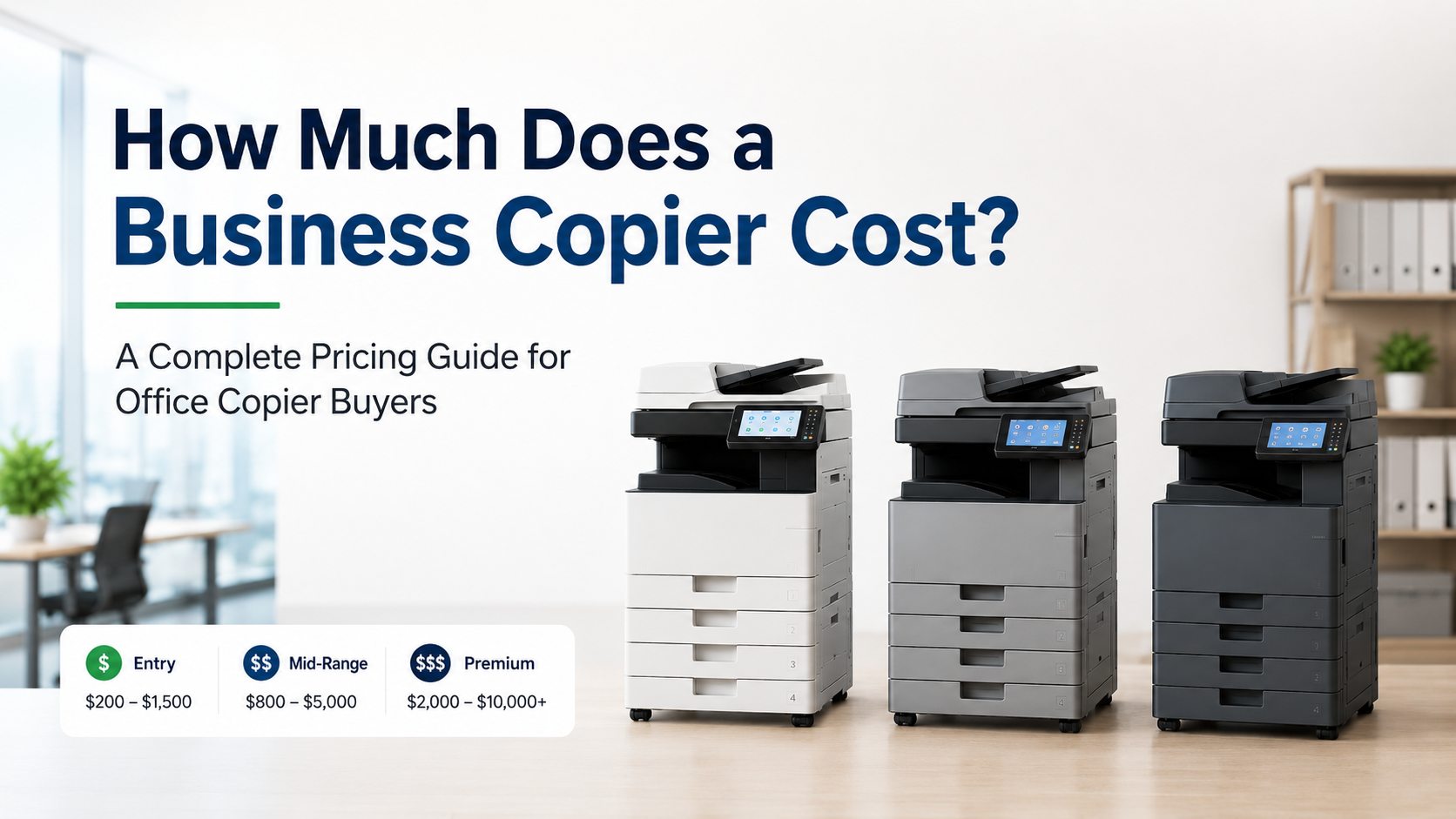
What Is the Average Cost of a Business Copier?
What factors influence the average cost of a business copier? The business copier cost varies considerably based on several criteria. For instance, small office copiers typically range from $200 to $1,500, while commercial multifunction copiers can exceed $10,000. Key elements in copier pricing include whether the machine is new or refurbished, its capability for color versus black-and-white printing, and its print speed. Monthly volume requirements and paper sizes also play vital roles in determining costs. Additionally, factors such as accessories, service agreements, toner, delivery, and installation contribute to the copier total cost of ownership. Financing options can further affect the overall expenditure. Understanding these variables is essential for businesses seeking to align their budget with their operational needs, ensuring a wise investment in office copier cost management.
Why Copier Prices Vary So Much
Copier pricing is influenced by a myriad of factors that collectively shape the total cost. The type of copier—new versus refurbished—plays an essential role, with new models typically commanding higher prices. Color copiers generally incur higher costs than their black-and-white counterparts due to advanced technology. Additionally, speed and monthly volume capacity markedly affect office copier pricing; faster, high-capacity machines cater to larger businesses, thereby increasing their market value. Additional features, such as finishing options and paper size capabilities, can also elevate costs. Brand reputation also influences commercial copier pricing, as established brands often demand premium prices. Finally, ongoing copier maintenance cost, including service agreements, toner, delivery, and installation, must be factored into any thorough copier price guide, as these elements contribute to the long-term investment associated with copier ownership.
New Copier Pricing
Investing in a new copier often comes with a higher price tag compared to refurbished models, primarily due to several key factors. New copiers typically feature the latest technology, ensuring enhanced performance and efficiency. Their full warranties provide peace of mind, as manufacturers back these devices, promising reliable operation over time. Additionally, new models tend to have a longer expected lifespan, which can mitigate long-term costs related to replacements and repairs.
When examining how much an office copier costs, buyers should consider features such as print speed, monthly volume, and accessories, all of which influence business copier pricing. For those exploring how much a commercial copier costs, understanding the potential for financing options, including copier lease costs, is essential. An office copier price guide can assist in navigating these variables, allowing businesses to make informed decisions tailored to their specific needs.
Used Copier Pricing
When considering the purchase of a used copier, potential buyers should carefully evaluate several critical factors that influence pricing. While used copiers can offer significant upfront savings, their condition, meter count, parts availability, and overall serviceability are paramount to guarantee a worthwhile investment.
|
Factor |
Consideration |
|
Condition |
Assess wear and tear on components |
|
Meter Count |
Lower counts indicate less use |
|
Parts Availability |
Confirm replacement parts are accessible |
|
Serviceability |
Check for reliable repair options |
|
Warranty |
Look for existing or additional coverage |
Understanding these factors can help buyers navigate the complexities of used copier pricing, enabling them to make informed decisions that align with their operational needs and budgetary constraints. A thorough evaluation is essential for maximizing the longevity and efficiency of the investment.
Refurbished Copier Pricing
For businesses seeking cost-effective printing solutions, refurbished copiers present a compelling option that balances affordability with reliability. Typically priced lower than new models, refurbished copiers offer a safer alternative to uninspected used equipment, making them particularly appealing for small to mid-sized enterprises. Pricing for refurbished copiers varies based on several factors, including brand reputation, print speed, monthly volume capacity, and included accessories. Additionally, service agreements and warranties may influence overall cost, providing further assurance of performance and longevity. Delivery and installation fees can also affect the final price. Businesses should consider their specific printing needs and budget constraints when evaluating refurbished options, as these copiers can deliver substantial savings without sacrificing quality. Ultimately, investing in a refurbished copier allows for a strategic balance of operational efficiency and cost management, positioning companies for growth while maintaining fiscal responsibility.
Color Copier vs. Black-and-White Copier Cost
While businesses often face the choice between color and black-and-white copiers, understanding the cost implications of each option is essential for informed decision-making. Color copiers typically incur higher initial purchase prices and ongoing operational costs due to the need for additional toner, drums, and maintenance. Conversely, black-and-white copiers generally offer a more economical choice, especially for organizations that primarily print monochrome documents.
Consider the following cost factors when evaluating your options:
- Initial Purchase Price: Color copiers are usually more expensive upfront.
- Operational Costs: Color copiers require more frequent toner replacements and maintenance.
- Usage Needs: Assess whether color printing is essential for your business or if black-and-white suffices.
Ultimately, businesses must weigh these factors against their specific printing needs to determine the most cost-effective solution.
Copier Lease Pricing vs. Purchase Pricing
The decision between leasing and purchasing a copier greatly influences a business’s financial strategy and operational flexibility. Leasing typically involves lower upfront costs, allowing businesses to manage cash flow more effectively. Monthly payments for leased copiers can be more predictable, facilitating budget management. However, the total cost of leasing over the contract period may exceed the initial purchase price, depending on the lease duration and terms.
Conversely, purchasing a copier entails a significant upfront investment, but it can provide long-term savings and ownership benefits. Businesses that opt for a purchase retain equity in the asset, which can be advantageous when considering future upgrades or resale value. Factors influencing both options include the copier’s model, features, service agreements, and expected usage. Ultimately, the choice between leasing and purchasing hinges on a business’s financial structure, operational needs, and long-term goals.
Hidden Copier Costs Buyers Should Know About
Maneuvering the costs associated with acquiring a business copier often reveals hidden expenses that can greatly affect the overall budget. Buyers must be aware of several factors that extend beyond the initial purchase or lease price.
- Consumables: Toner and other supplies can considerably add to operating costs. The frequency of replacements can vary based on usage.
- Service Charges: Service calls for maintenance or repairs can incur unexpected fees, especially if the machine experiences frequent downtime.
- Installation and Setup: Costs related to delivery, installation, and network setup often go overlooked, but they can be substantial, particularly for complex environments.
Understanding these hidden costs is essential for making informed decisions and ensuring that the total cost of ownership aligns with budgetary constraints. Careful consideration of these factors will empower buyers to navigate their copier investments more effectively.
How Service Contracts Affect Copier Cost
Understanding how service contracts influence copier costs is essential for businesses aiming to manage their budget effectively. Service agreements can greatly alter the overall expense associated with copier ownership. Cost-per-page agreements, for instance, provide predictable pricing by charging a fixed rate for each printed page, allowing businesses to budget accurately. Maintenance plans often include regular servicing, reducing the likelihood of unexpected repair costs and enhancing equipment longevity.
Toner-inclusive programs can further streamline expenses by bundling toner costs within the service contract, which mitigates the burden of purchasing supplies separately. Additionally, the quality of service provided under these contracts can impact long-term value; superior service often translates to improved uptime and productivity. Consequently, businesses must carefully evaluate the terms of service contracts to guarantee they align with their operational needs and financial goals, ultimately influencing the total cost of ownership for their copiers.
How to Get an Accurate Copier Quote
Evaluating service contracts provides a foundation for determining the true cost of copier ownership, but obtaining an accurate quote requires a thorough assessment of specific operational needs. Buyers should focus on several key factors to guarantee they receive a tailored pricing estimate.
- Monthly Volume: Understand the expected print volume to identify suitable models and pricing structures.
- Color Usage: Determine the ratio of color to black-and-white printing to gauge toner costs and pricing implications.
- Desired Features: Specify essential features, such as scanning capabilities and paper size compatibility, to refine options further.
Frequently Asked Questions
What Are the Best Brands for Business Copiers?
The best brands for business copiers include Canon, Xerox, Konica Minolta, Ricoh, and HP. These manufacturers are recognized for their reliability, advanced features, and service support. Canon excels in color printing, while Xerox is known for high-volume capabilities. Konica Minolta offers versatile solutions, and Ricoh provides excellent workflow integration. HP is favored for its user-friendly interface and efficiency. Businesses should assess specific needs to determine the most suitable brand for their operations.
How Long Do Business Copiers Typically Last?
Business copiers typically last between five to seven years, depending on usage, maintenance, and model quality. Factors influencing longevity include print volume, the type of technology used, and adherence to service schedules. Regular maintenance can extend a copier’s lifespan, while heavy use may lead to earlier replacement. Organizations should assess their specific needs and usage patterns to determine the most suitable copier type, ensuring peak performance and longevity.
Can I Negotiate Copier Prices With Vendors?
Yes, copier prices can often be negotiated with vendors. Factors influencing negotiation include the type of copier, volume requirements, and existing vendor relationships. Buyers should be prepared to discuss their needs and explore options such as bundled services or extended warranties. Additionally, understanding market prices and competitor offerings can strengthen a buyer’s position. A strategic approach can yield favorable terms, potentially reducing overall costs and enhancing the value of the purchase.
What Are Common Maintenance Issues With Business Copiers?
Common maintenance issues with business copiers include paper jams, toner shortages, and misaligned print heads. Additionally, wear and tear on components such as rollers and fusers can lead to decreased performance. Regular maintenance checks can prevent these problems, enhancing efficiency and longevity. Users should also monitor error codes, which often indicate specific malfunctions. Addressing these issues promptly is essential for maintaining peak operational capacity and minimizing downtime in a business environment.
Are There Eco-Friendly Copier Options Available?
Eco-friendly copier options are increasingly available, catering to environmentally conscious businesses. These copiers utilize energy-efficient technologies, such as duplex printing and low-energy standby modes, to minimize power consumption. Additionally, many models incorporate sustainable materials and offer features that reduce paper waste. Manufacturers often provide recycling programs for toner cartridges and other components. By selecting eco-friendly options, businesses can not only reduce their carbon footprint but also promote sustainability within their operational practices.
Conclusion
To summarize, understanding the cost of a business copier requires careful consideration of various factors, including type, features, and condition. With prices ranging from a few hundred to several thousand dollars, potential buyers must evaluate both initial investments and ongoing expenses, such as maintenance and consumables. By recognizing the nuances of pricing, including leasing versus purchasing and the implications of service contracts, businesses can make informed decisions that align with their operational needs and budgetary constraints.


